
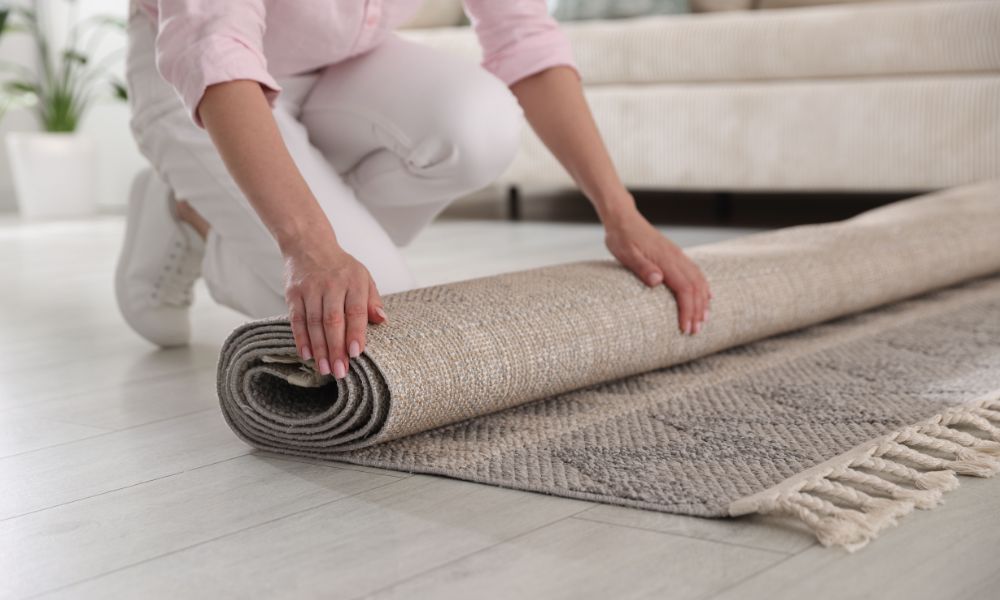
Open-plan living and dining rooms are very common in the Los Angeles apartments I work on.
On a floor plan, it looks like one large room, even though people use one half for the sofa and the other for the dining table.
Then we get to the rugs, and suddenly a fairly simple space becomes much harder to finish than it seemed at first.
If you’re choosing between one big rug or 2 separate rugs in a living-dining room, I’d first look at how clearly the two areas are already separated.
One large rug can tie them together into a single space, whereas two separate rugs can follow the furniture layout in each area more precisely.
I’ve used both options with clients.
Although They Look Similar at First Glance, There Are Differences
One large rug gives the entire room one continuous surface.
I usually consider it when the sofa and dining table sit relatively close together, especially in a smaller apartment where too many separate shapes on the floor can make the space feel even more divided.
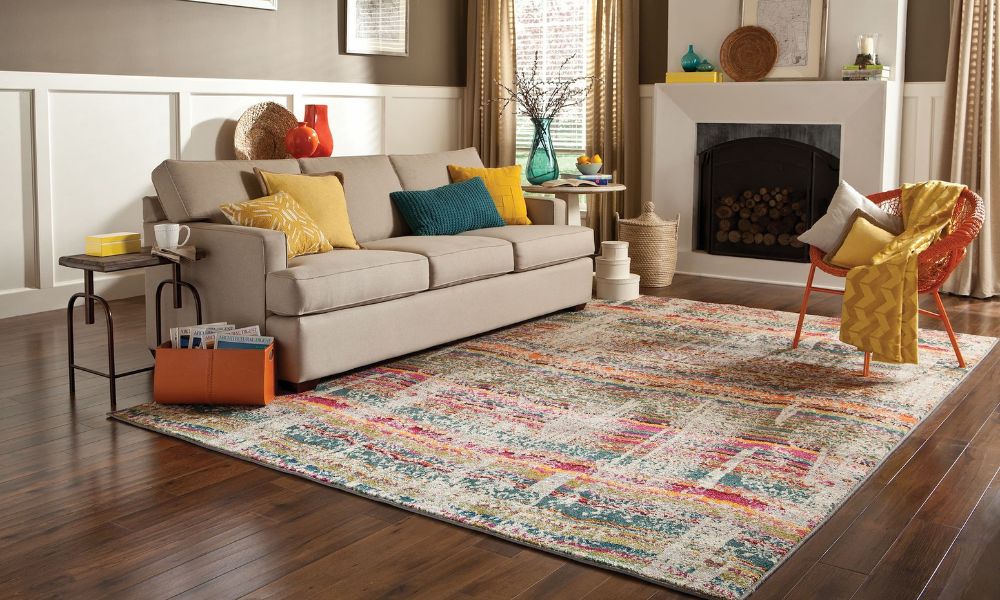
Two rugs give you more control over each area.
The rug in the living area can match the size of the sofa and armchairs, whereas the dining rug can accommodate the table and the space occupied by the chairs when they’re pulled out.
Before I choose either option, I like to look at how much floor space each layout actually covers and make my decision based on that.
Here’s How to Position One Rug for the Best Result
With one large rug, I first check if the room can actually accommodate it without the rug almost touching the walls.
For example, a 10 x 14-foot rug already covers 140 square feet, so I’d mark its full dimensions on the floor before placing an order.
Ruggable recommends that size for a room measuring at least 11.5 x 15.5 feet, with visible floor space around the rug.
Before choosing a rug size, it helps to visualize how the rug will sit in relation to the furniture. This Pinterest example offers some additional inspiration for planning rug placement.
That gives me a good place to start, especially in newer apartments where the living-dining area often looks much larger in photos than it does once the furniture is in place.
Next, I look at where the dining chairs end up when someone pulls them out. If the same rug also extends under the dining table, the chairs need to remain on its surface during normal use. Ruggable also recommends that a dining rug extend at least 24 inches beyond the edge of the table.
A few years ago, I worked on an apartment where the owners wanted an enormous rug because they thought it would make the space look wider.
When we marked out 12 x 15 feet on the floor with painter’s tape, the edge ended up just a few inches away from the kitchen cabinets.
We reduced the size before buying it and avoided a very expensive mistake.
With 2 Separate Rugs, I Start With the Furniture
With two rugs, I briefly forget about the room as a whole and look at each furniture group separately.
In the living area, I generally want at least the front legs of the sofa to sit on the rug.
If the rug ends completely in front of the sofa, the entire group often looks as though each piece belongs to a different part of the room.
In the dining area, I measure the table first, then add space for the chairs. That’s why two rugs very often end up with different dimensions, and I’m perfectly fine with that.
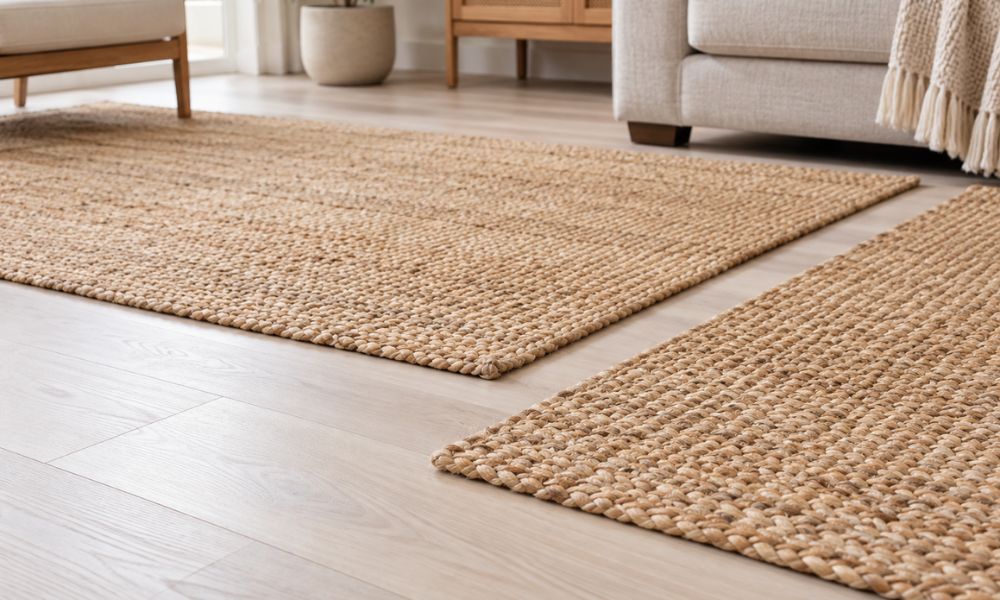
This open-plan interior is a good example of how two separate rugs can work together. The larger rug anchors the sofa and seating area, while the smaller one defines the dining space without interrupting the room’s overall flow.
If you can walk comfortably between the sofa area and the dining table without stepping over the corners of the rugs, the layout is usually well arranged.
The problem comes when the two rugs almost touch. At that point, they start to look like one rug divided by a narrow strip of exposed floor.
In that situation, I’d choose a smaller rug for one area or increase the distance between them.
Do 2 Rugs Have to Match?
I wouldn’t automatically choose an identical pair.
I prefer some clear connection between them. It could be a similar color or material, but both rugs don’t need to have the same pattern.
Michael Cox of Foley&Cox suggests combining one solid-colored rug with one patterned rug in an open-plan space.
I like that approach because it distinguishes the areas without making the floor look like two completely separate projects.
Choosing two rugs that work together isn’t always easy, especially when mixing different colors and patterns.
In this video, Andrea shares practical tips for combining multiple rugs while keeping an open-plan space looking cohesive.
So Which Option Is Better?
I’d choose one large rug when the living and dining areas are close together and the furniture already feels like one connected group.
I’d choose two rugs when there’s a clear stretch of open floor between the sofa and the dining table.
That option also gives me more freedom when one furniture group requires a much larger rug than the other.
If you’re still unsure which option would work better in your space, this short video from designchickee offers another perspective on choosing between one large rug and two separate rugs in an open-plan living and dining room.
There’s no single rule I can apply to every project. The answer really comes down to you. You know what they say: beauty is in the eye of the beholder!
What Would I Choose?
I like dilemmas like these because personal taste really does play a major role.
For a smaller apartment, I’d probably try two separate rugs first and measure each area individually.
In a wider room, where the sofa and dining table sit closer together, I’d easily choose one large rug.
And if my next Los Angeles project has enough space for a 12 x 18-foot rug without it getting too close to the kitchen cabinets or a wall, I’ll probably enjoy that problem a lot more than I should.