
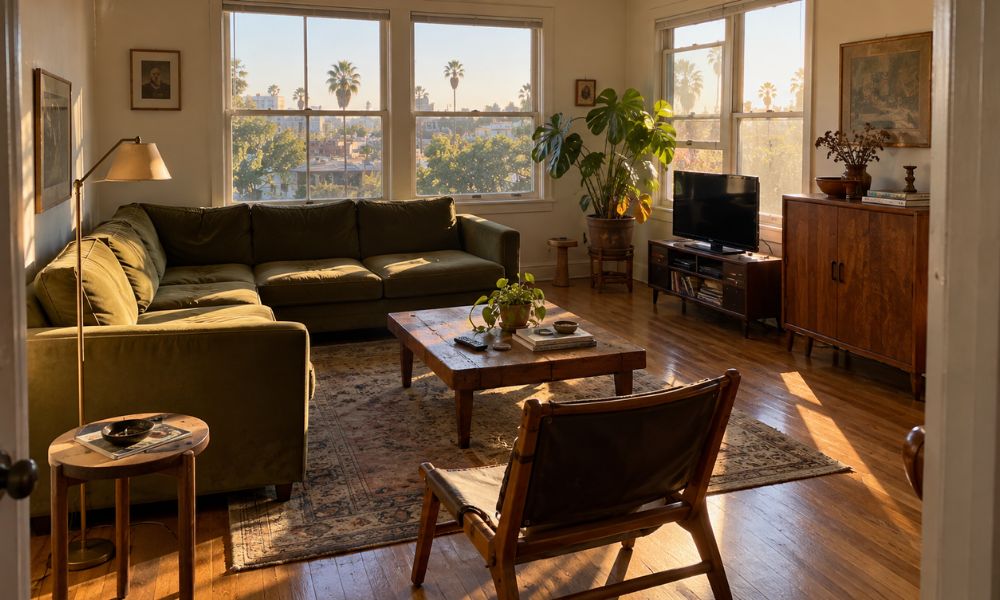
Sometimes in this line of work, it is much harder to find a place for a lamp than for a sofa.
Lately, sectional sofas have been bothering me in particular, mostly because they end up exactly where their name suggests, in the corner.
Add a small desk on the other side of the room and suddenly every corner is taken.
And we need floor lamps, because who does not like to relax after work with 800 pages of a Russian classic? I am kidding, I know most of you flip through a few magazines.
If all the corners are already taken, floor lamps can stand behind the arm of the sofa, right next to its open end, or between two zones in the room.
With arc models, the base can stay outside the seating area while the light reaches over the place where you need it. A corner is only one possible location.
Here are a few tips, straight from the boulevards of Los Angeles and the apartments along them whose walls, if they could talk, would tell all kinds of stories.
Sometimes the best solution is also the simplest. This example from Instagram account @loveletters_home shows how a floor lamp can make an otherwise unused space beside a sofa feel intentional, without rearranging the furniture.
View this post on Instagram
Put Floor Lamps Slightly Behind the Arm of the Sofa
This is the first place I check when a sectional takes up the entire corner.
Sit in the spot where you read most often. Then look at the space immediately behind the armrest.
There are often around ten inches of floor there that are barely used at all, especially if the sofa sits a few inches away from the wall.
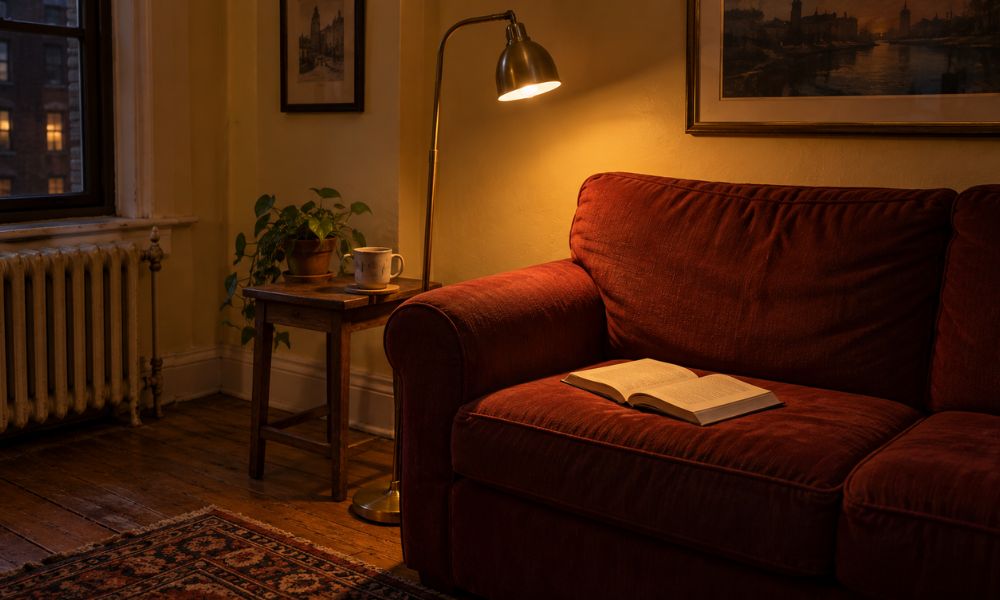
For floor lamps intended for reading, I would place the lamp slightly behind your shoulder and off to the side.
One good guide for lamp placement uses a very simple starting point: the bottom edge of the lampshade should be roughly at eye level while you are seated.
The light source then stays out of your direct line of sight, while the page of the book gets light over your shoulder.
I would test it like this:
- Sit in your usual spot.
- Have someone hold the lamp behind the armrest.
- Move it until you can no longer see the bulb directly.
- Open a book or magazine and check where the light falls.
If you have 12 inches between the sofa and the wall, a 10-inch base already tells you there is a chance you can fit floor lamps there without taking up another corner.
Tip 2: With a Sectional, Move the Base and Bring the Light Over With an Arc
Arc floor lamps are particularly interesting to me with large sectional sofas.
Imagine a sectional that has already taken over the back left corner of the room. There is no room for a standard lamp next to the chaise, and there is a wall behind it.
I would then check the opposite side and see whether the base can stay next to the outer end of the sectional.
The arc then brings the light toward the place where you sit.
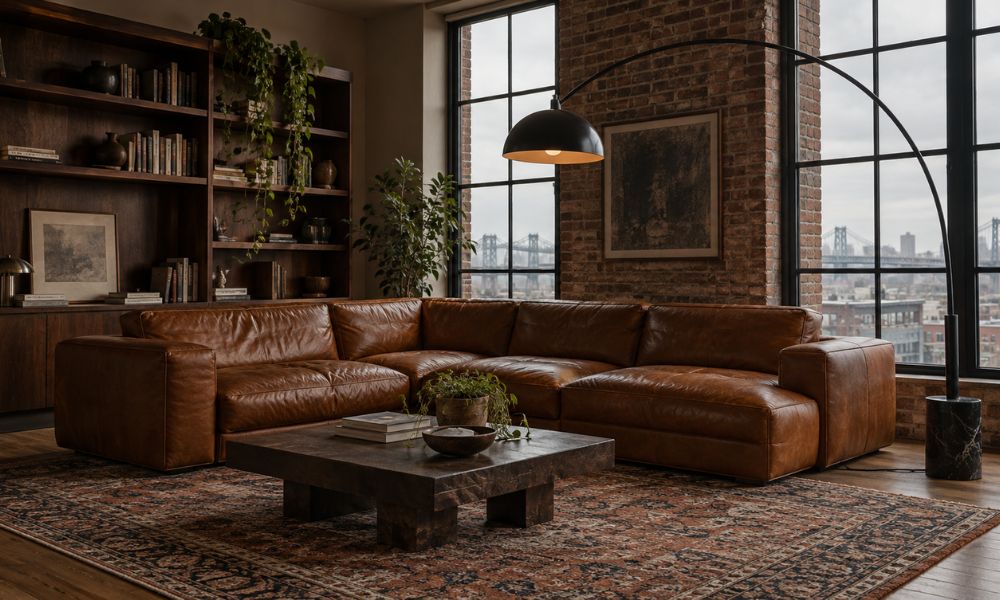
With these types of floor lamps, I first measure the reach of the lamp arm.
In its guide to arc models, Niori recommends that you measure the full overhang before buying and make sure the shade does not extend into the path of people walking through the room.
If you want reading light, I would bring the end of the arc above the side of the seat, and if you want softer light for the entire sofa area, I can move it closer to the middle.
Tip 3: Use the Space Between the Desk and the Sofa
A small desk often takes up the last free corner. That immediately raises another question for me: can we use one lamp for both areas?
We can, with the right model.
If you have around 10 to 14 inches of free floor space between the desk and the sofa, I would look at slim floor lamps with one or more adjustable heads. The base stays between the two functions, so you can direct the light toward whichever area you are using at the time.
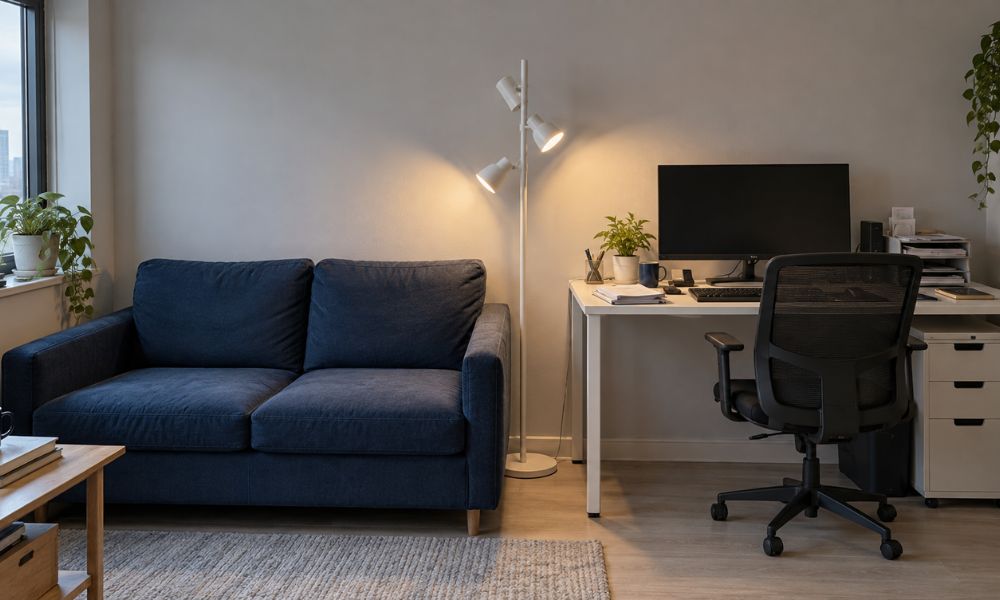
I like models with multiple separate light sources here.
How little floor space can actually be enough? I looked at two current IKEA models purely as a reference for dimensions.
| Floor lamps | Base and height | U.S. price, October 2026 |
|---|---|---|
| NYMÅNE with adjustable head | 10-inch base, 67 inches high | $69.99 |
| NYMÅNE with three adjustable heads | 10-inch base, 63 inches high | $99.99 |
The price difference is $30, and both models take up roughly the same circle of floor space. The model with three heads can light several parts of the room from one position.
You do not have to buy either of them. I find them interesting because they show how little space some floor lamps actually use.
A Few Questions I Thought Were Cool Too
While researching this topic, I came across several situations I had not thought much about before. I decided not to leave them out of this article because they are very interesting.
Can Floor Lamps Stand in Front of a Window?
They can, especially slim models that do not cover a large part of the glass.
Can Floor Lamps Replace a Ceiling Light in a Small Living Room?
In some smaller apartments, they can provide a large part of the evening light, especially when you use multiple light sources placed around the room.
What If the Only Place for a Floor Lamp Is Next to a Radiator?
I would generally skip that spot.
Heat can affect lampshade materials and electrical components, and a tall floor lamp can interfere with the flow of warm air through the room.
Can I Run a Floor Lamp Cord Under a Rug?
I have a very clear answer here: do not.
The U.S. Consumer Product Safety Commission warns that cords should not run under rugs, because the rug traps heat. Its newer home safety checklist also advises against placing cords under furniture or where people walk over them.
If the layout requires a long cord across the main walkway, I would change the position of the floor lamps or talk to an electrician about a better power source.
Mistakes I Would Avoid With Floor Lamps
A few small things here can easily ruin an otherwise good solution, just like with everything in life!
- Buying based on the overall height of the lamp. In tight spaces, I first care about the diameter of the base because that determines whether the lamp physically fits.
- A tripod base in a narrow walkway. Three legs can take up much more floor space than they appear to in the product photo.
- A foot switch under the sofa. Check where the switch ends up before hiding the cord behind a large sectional.
- An arc lampshade above a place where people stand up. Sit down and stand up several times before deciding on the final position.
- A bulb too close to a curtain. It is advised to keep flammable materials away from bulbs, especially types that produce more heat. I would use an LED in accordance with the lamp’s specifications.
If you are still deciding which type of floor lamp would work best in your room, this short video offers a few useful reminders about lamp height, shade placement, and choosing the right design for your space.
What Did We Learn Together?
I like problems like these because they remind me how much the layout of a room changes once people actually start using it.
When all the corners are taken, I stop looking at the corners. I am not interested in problems, I am interested in solutions!
And if a client tells me they need a floor lamp exclusively for 800 pages of Dostoevsky, of course I will believe them. Until I see the pile of magazines next to the sofa.