
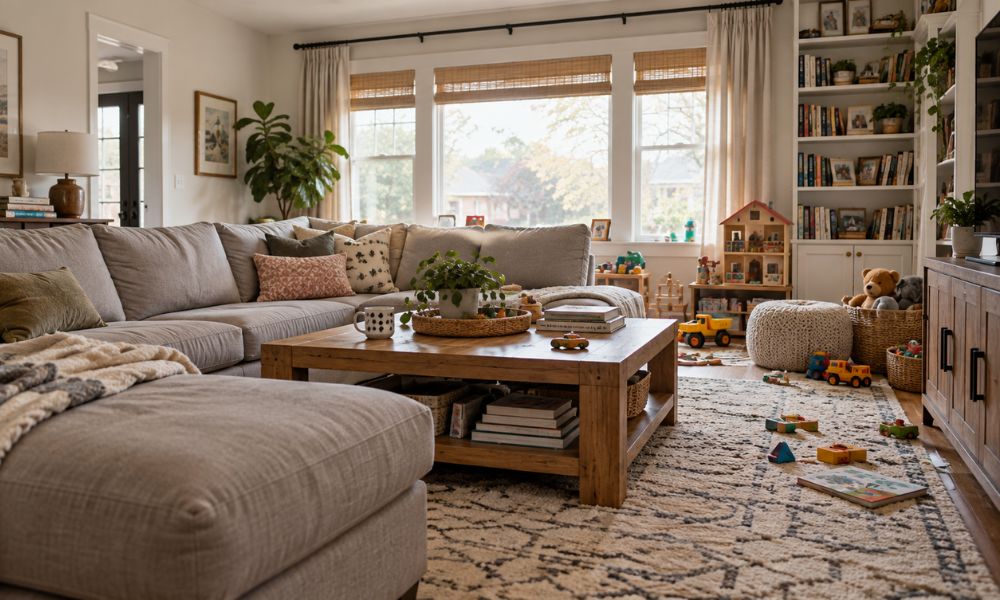
When a living room still feels crowded after removing furniture, the problem is often more complicated than simply having too many things in the space.
The client usually looks at me, then at the empty spot where an armchair stood until yesterday, as if someone made a mistake in the math.
If your living room still feels crowded after removing furniture, the problem often lies in the size of the remaining pieces, the relationship between them, or the amount of stuff your eye sees at once.
During renovations, I therefore try to make sure usable furniture first goes to someone who will actually use it.
Los Angeles Sanitation also recommends donating before scheduling their free bulky item pickup, which the city organizes on your regular trash collection day after you request it in advance.
It is good to have that option in a city where an old dresser or table that no longer has anywhere to go can pile up very quickly during a renovation.
Why Your Living Room Still Feels Crowded Even With Less Furniture
During my first year studying interior design, we talked a lot about scale, and at the time it sounded pretty academic to me.
After 14 years of working with real apartments, I use the same principle almost every day.
Every piece should fit the size of the room. There should be enough space around the furniture for normal movement.
Your eye should also have a few calmer surfaces where it can rest.
Before I change the layout, I check a few basic measurements.
| What I Check | Good Starting Range | Why I Check It |
|---|---|---|
| Sofa to coffee table | 14 to 18 inches, about 36 to 46 cm | Leaves room for your legs while keeping the table close enough |
| Main walkway through the room | 24 to 36 inches, about 61 to 91 cm | People can walk through without having to move around seating |
| Spacing in a gallery wall | 2 to 4 inches, about 5 to 10 cm | Multiple frames visually function as one group |
The numbers I use as a starting point for checking a space, based on guidelines for spacing around a coffee table, main walkways through a living room, and spacing between pictures.
Mistake 1: You Removed the Small Things, but the Biggest Piece Is Still Too Large
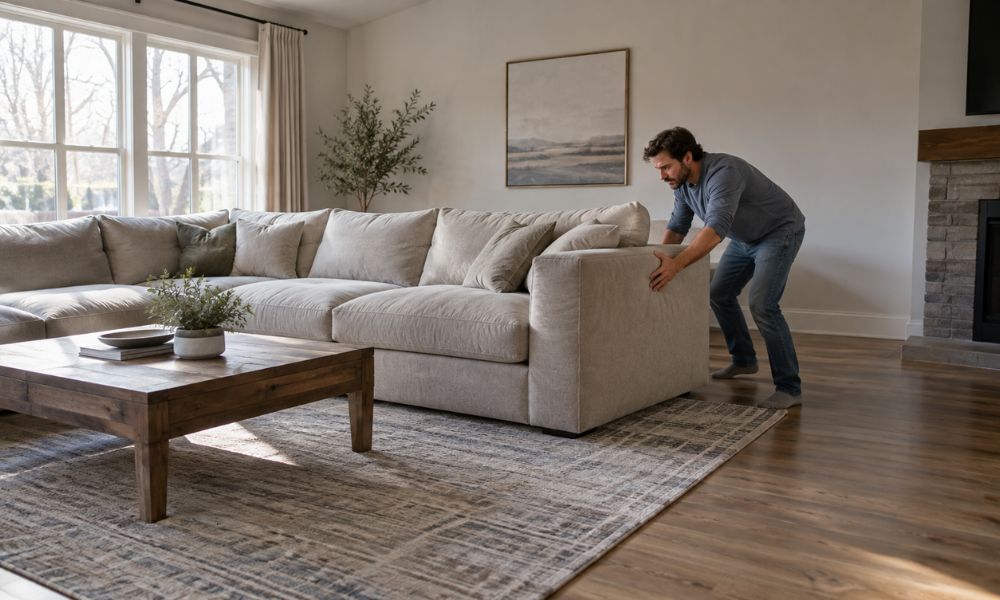
I see this very often. The side table and extra chair disappear from the living room. The client removes a lamp or plant.
The large sofa, around forty inches deep, stays in the same place and the room still feels almost exactly the same.
Why?
The largest piece takes up the biggest part of your field of vision. An especially heavy shape with wide armrests can take up much more visual space than several smaller pieces combined.
Baumgartner Furniture, in its guide to rooms that look cluttered even when they are tidy, specifically points to oversized pieces and wide, low furniture as common causes of that feeling.
With a client, I would first measure the depth of the sofa, then check how much open floor space remains in front of it. Then I would look at the width of the armrests.
A 90-inch-wide sofa with very large side sections can offer less usable seating than a narrower model with a simpler profile.
It is sometimes easier to understand furniture proportions when you see different layouts side by side.
The video below shows how the size and placement of the main pieces affect the way a living room looks and how comfortably people can move through it.
How Would I Fix It?
I would not immediately buy a new sofa. I would first move it a few inches and check its new relationship with the rest of the room.
If it still dominates almost the entire room, then I would consider a smaller model. In a living room of around 150 square feet, reducing the sofa depth by six inches can free up quite a bit of space along its entire width.
One properly sized piece often makes a bigger difference than removing four small decorations.
Mistake 2: The Floor Is Emptier, but the Walls Are Still Full
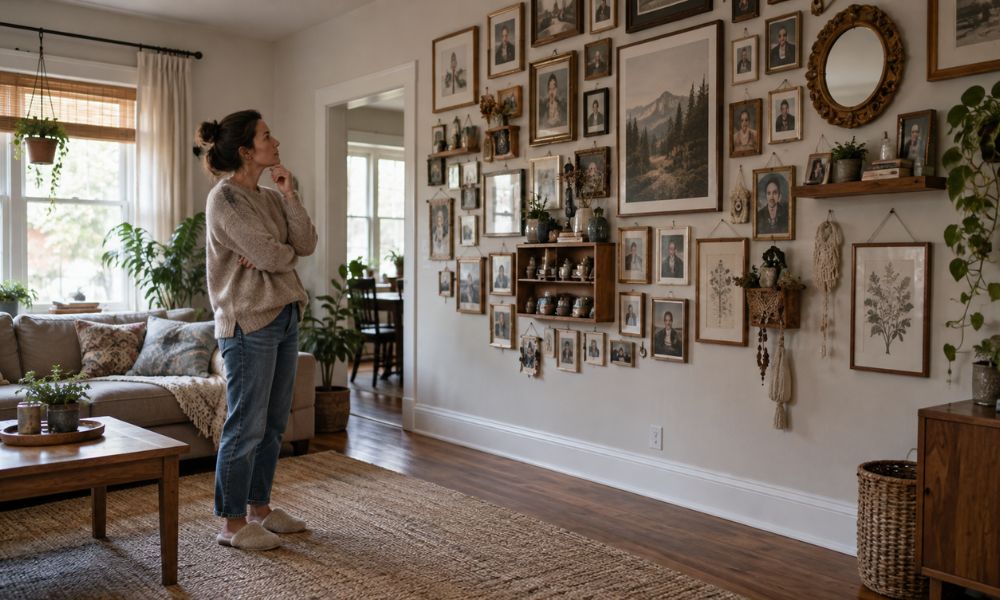
I once worked on an apartment where the owner had cleared out the living room. When I came back, the floor looked much more open, and my eyes immediately went to a wall with more than twenty small frames.
The room still felt full.
A large number of small pictures gives the eye many individual points to process. Add a shelf with decor beneath them and you get a large amount of information on a relatively small wall surface.
Architectural Digest, in a guide to visual clutter in the living room, identified an excessive amount of wall art as one of the problems that can easily remain after a traditional decluttering.
A gallery wall can certainly look good, but I like them when there is enough wall space for them.
In a small living room, I would choose one clearly defined group and leave part of the wall empty. If you already have many smaller pieces you want to keep, arrange them on the floor first. Create one composition, and only then pick up the drill.
Mistake 3: A Rug That Is Too Small Has Squeezed All the Furniture Into the Middle
I could recognize this mistake pretty quickly even without a tape measure.
You buy a nice rug, then try to make the sofa and both chairs touch its edge. The coffee table has to fit between them, so the whole group slowly gets pushed toward the center of the room.
In the end, you have a large living room that looks as if all the furniture was instructed to stand on one small island of floor.
It helps to look at how a rug relates to the furniture around it. When the proportions are off, even a room with plenty of floor space can feel cramped. The example below is a useful reference when evaluating your own seating arrangement.
That exact situation appeared in a Reddit discussion. The owner could not figure out what was bothering her, and several people noticed that the sofa and chairs were crowded around a rug that was too small.
After receiving advice, she spread the furniture out and removed several plants, then wrote in an update that she had already made those changes.
With a larger rug, the front legs of the sofa and chairs can naturally sit on it without everything needing to be pulled toward the center. That gives you a wider seating area and more visible floor between the main pieces.
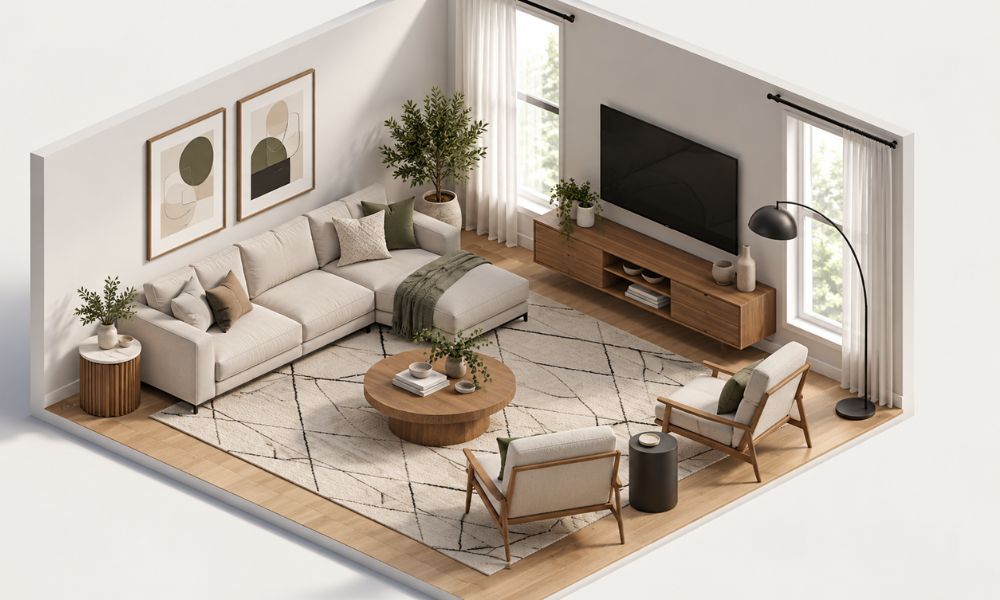
If there is currently no room in the budget for a new rug, I would do a free test. Remove the existing rug for one day and position the furniture according to the room instead of according to its edges.
Look at the room again.
If it suddenly feels wider, you found the problem.
Mistake 4: Something Is Always in the Way on the Path to Another Room
This is where removing furniture often goes in the wrong direction. The client gets rid of a side table because it takes up space, while a large armchair still cuts across the main walkway.
There are guidelines for how to solve this according to rules used by experienced interior designers!
Walk from the entrance to the most frequently used door along your normal route. If you have to change direction because of one piece, move that exact piece.
Sometimes a small change in furniture placement is enough to make the room feel more open. This before-and-after example gives you a better idea of how rearranging the seating can change the way a living room feels.
On a project, I would sometimes move the sofa closer to the middle of the room if that gave me a clear walkway behind it. People often assume that open space along the wall will automatically make the room feel larger, but a layout that allows natural movement gives a much better result.
What I Learned After Enough Living Rooms Like These
I like projects like this because the solution sometimes looks completely wrong until you try it. The client expects us to remove one more thing, while I bring back the chair we already took out and move the sofa ten inches.
Then everything finally falls into place.
So, if you have already removed half your stuff and your living room still feels crowded, keep the phone number of the people who haul away bulky furniture saved in your phone for a little while longer, but do not call them yet.
You may already have removed quite enough.