
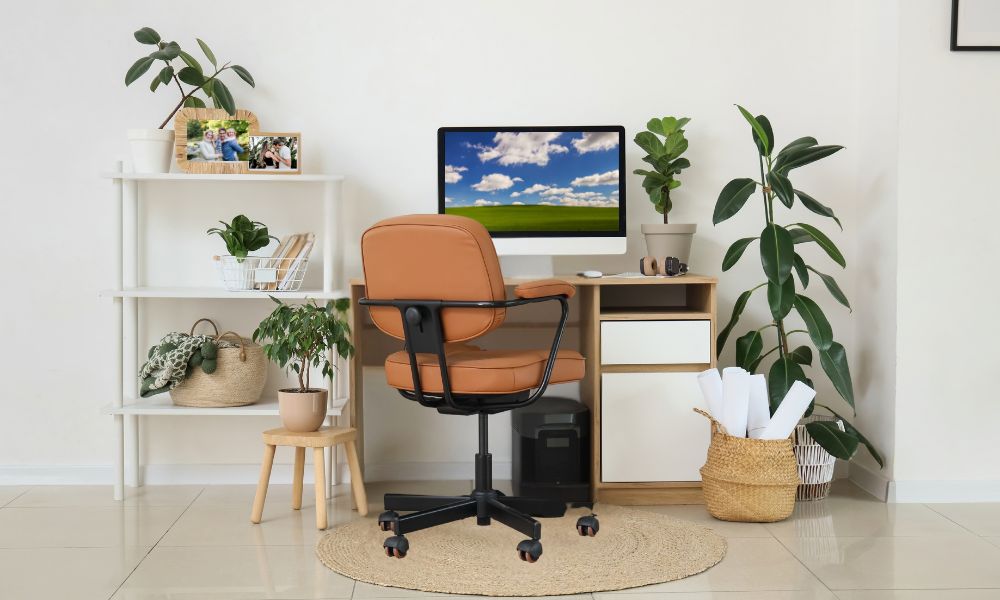
I am setting up a home office for a client who recently started a work-from-home job.
One room that the family mostly used for storage now needs to become a proper office, with a desk, a good chair, suitable light, and enough space for someone to spend most of the workday there.
Not everyone has that option, and many people end up working in the same room where they sleep, which comes with its own set of problems.
I have not worked on many projects like this over the past few years, and I quickly caught myself trying to remember some basic ergonomic measurements that once came to me without much thought.
When you do not use certain knowledge for a long time, part of it simply fades.
If you want to know how high a desk should be, the short answer is that most standard desks sit between 28 and 30 inches, or about 71 to 76 centimeters.
When you sit normally, your feet should have full support, your shoulders should stay relaxed, and your forearms should sit roughly level with the desk surface.
Your elbows should form an angle close to 90 degrees.
I did not want to rely on half-remembered facts, so I spent part of the evening with a few ergonomic guides and some reference material. By the end, I found it slightly funny how many details I had to learn again.
Here is what I picked up again, and I hope it saves you some time if you are trying to solve the same problem.
Why Most Mass-Produced Desks Sit Around 29 Inches High
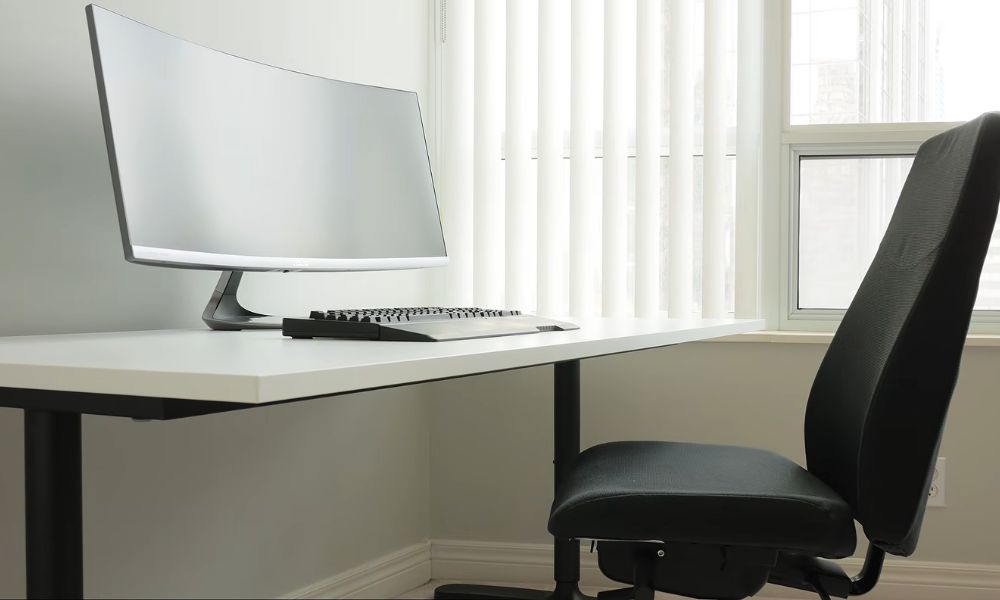
Standard desk height exists for a reason. Manufacturers need to make furniture that suits a large number of people, so most ready-made models fall within a fairly narrow range.
According to a TiMOTION guide, a common adult desk height falls between 28 and 30 inches, or 71 to 76 centimeters. I found a similar range among other office furniture manufacturers.
My client is a little taller than average, yet a standard-height desk caused no problem at all. Once he sat down and adjusted the chair, his arm position felt natural. That was another reminder that body height alone does not always decide the right desk height.
How Do You Set the Height of a Custom Desk?
Sit in the chair you plan to use for work. Keep your feet fully supported, relax your shoulders, and bend your elbows to roughly 90 to 100 degrees. TWHEELS recommends that your forearms stay roughly parallel to the floor in that position.
Next, measure the distance between the floor and the underside of your elbow. The desktop should sit close to that height.
If you have to raise your shoulders to use the keyboard, the desk sits too high. If you have to lean down toward the work surface, it probably sits too low.
For a custom desk, I would check that measurement before the carpenter cuts the top. A difference of only 1 to 1.2 inches, or 2 to 3 centimeters, can change arm position quite a lot over several hours of work.
When Is a Custom Desk a Good Choice?
If I design a home office for one person, I often prefer a custom desk over a ready-made model, and appearance is only part of the reason.
I can match the desktop height to the way that person sits. I can set the depth around the monitor and other equipment.
I can also place drawers and supports so they do not take away knee and leg space.
The main drawback of a fixed custom desk is simple. Once it is built and installed, you have far less room for correction.
Sometimes an Adjustable-Height Desk Makes More Sense
View this post on Instagram
An adjustable desk can work especially well when several people use the same workspace, when you want to spend part of the day on your feet, or when you are still unsure which exact height feels best.
With electric models, I pay most attention to the adjustment range. A shorter user and a taller user may need very different positions.
Better models also let you save several presets, so one height can stay set for sitting and another for standing.
I made a short reference table with the ranges I would check before buying:
| Shorter user, seated | about 24-26 in / 60-65 cm |
| Average seated position | about 28-30 in / 70-75 cm |
| Taller user, seated | about 30-31.5 in / 75-80 cm |
| Average standing position | about 39-45 in / 100-115 cm |
| Taller user, standing | about 45-49 in / 115-125 cm |
What Did I Take Away From the Project?
A simple desk forced me to refresh knowledge that I once used far more often.
That remains one of the parts of interior design I enjoy after all these years. You enter a project convinced that you already know the answer, and you leave with a few fresh conclusions.
If another client asks me in a few years how high a desk should be, I hope I will not need to open quite so many browser tabs. I may just send them the link to this article.