
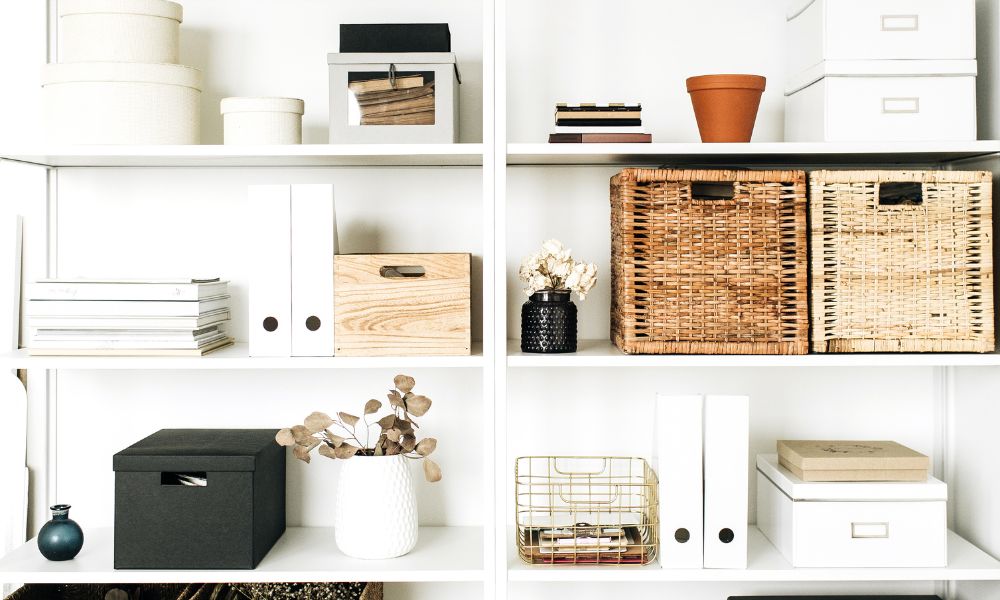
A few years ago, I worked on a living room where the owners had almost twenty feet of shelving and cabinets along two walls. They still insisted they did not have enough space for their things.
We opened the cabinets together. Inside were old cables, board games they had not used in years, and several empty boxes.
The problem was very simple: they had a lot of living room storage space that was being used for the wrong things.
If you want living room storage that does not take over the whole room, I would first concentrate the storage in one or two places.
After that, I would check whether the furniture already taking up floor space could serve an additional purpose, and only then would I think about adding a new cabinet.
My Tips for Making Living Room Storage Actually Functional
Before I draw shelves, I ask clients where they currently keep the remote controls.
I ask where the laptop ends up after work and what keeps reappearing on the coffee table every morning.
But let’s go through a few of the most important tips together:
1. Put Most of the Storage on One Wall
If one wall can hold the main living room storage, I would start there.
I would also consider the overall living room furniture layout before deciding where the storage unit should go, especially if it could interfere with the main walkway.
media unit with a closed lower section and a few shelves is often a better choice for me than several smaller cabinets spread around the room.
Rob Wiseman Cabinetry demonstrates how a built-in media wall combines closed cabinets, display shelves, and a TV in one cohesive design.
Camilla Clarke of Albion Nord recommends using existing niches and alcoves for storage, which is something I often do as well.
If you already have a niche that is 15 inches deep, I would first try to use it before adding a cabinet that projects farther into the room.
Video: Bunnings Warehouse explains how to plan practical living room storage cabinetry.
2. Measure the Largest Thing You Plan to Hide
With custom living room storage, I first measure the largest item that needs to go inside.
An audio component that is 14 inches deep also needs room for the connectors in the back, while a large board game can determine the height of an entire shelf.
Once, we had to change the back of a custom cabinet because the client’s audio equipment was deeper than the original specification.
Since then, I measure those things myself whenever I get the chance.
3. Put Cables Behind Doors
Books look good on an open shelf. Chargers and spare cables work much better behind closed doors.
Professional organizer C. Lee Cawley used closed baskets for cables and small items under the TV in an Apartment Therapy project.
With electronics, I would also check the manufacturer’s ventilation requirements before enclosing a device in a cabinet.
4. Replace a Regular Side Table With One That Has a Drawer
If a side table already takes up 18 inches of floor space next to the sofa, it should at least do more than hold a glass.
A model with one drawer can hold the remote or a charger without adding another living room storage piece.
I would keep it roughly the same width as the existing table. A larger storage model can easily eat up the space we were trying to save.
5. Let the Coffee Table Store the Things You Use on the Sofa
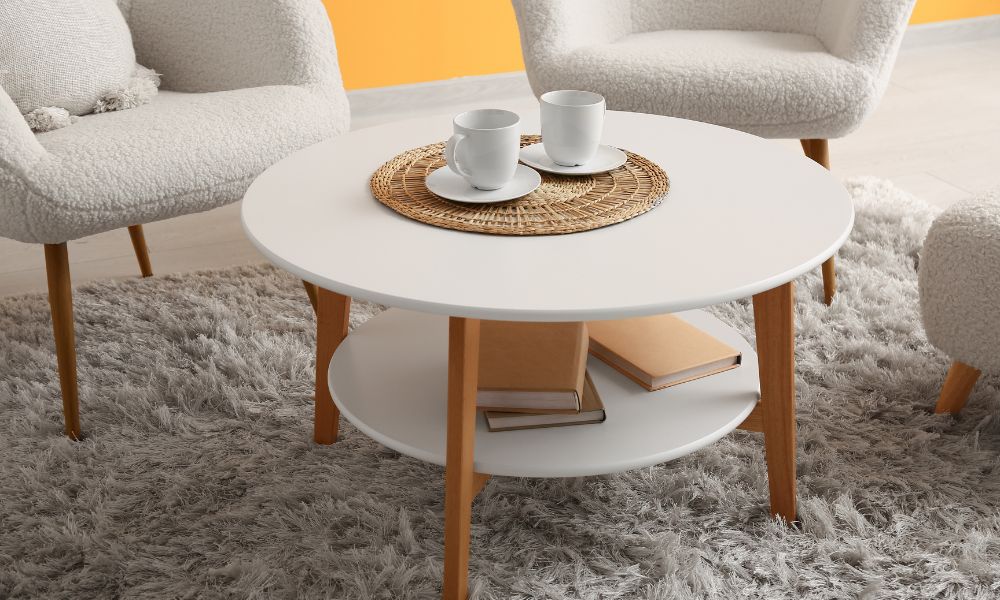
The coffee table already takes up the central part of the living room, so a model with one large drawer or a lift-top often works well for me.
Interior designer Lisa Quinn recommends a lift-top coffee table with hidden storage. I would keep the laptop you use on the sofa or the remote controls inside.
If you have to spend ten minutes moving things around before you can close the table, there is too much inside.
6. Keep Open Shelves for Things You Actually Want to Look At
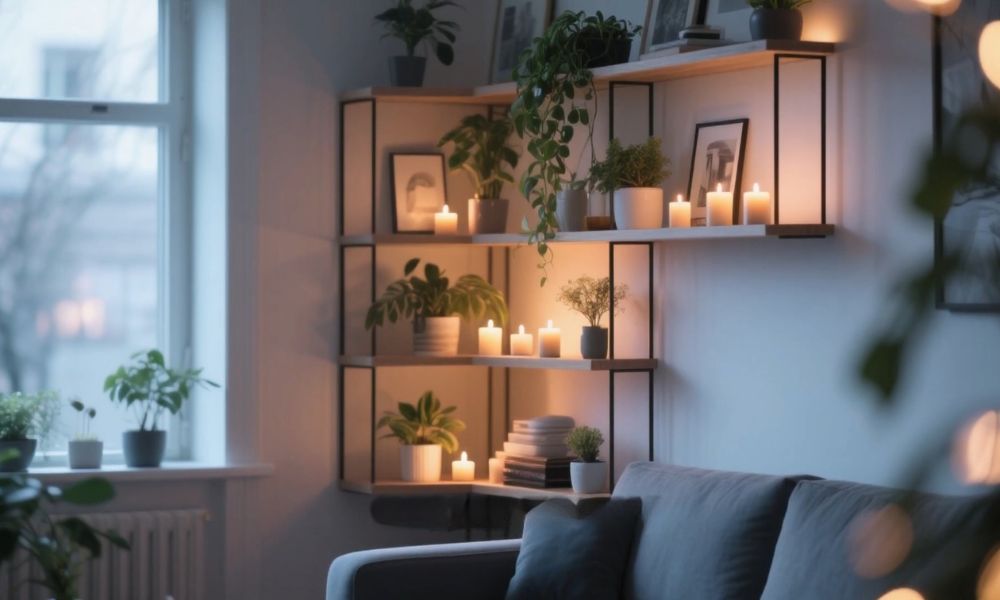
With open shelving, I choose books and a few objects the owner genuinely wants in the room. Boxes of cables stay in the closed section.
Part of the shelf can stay empty. That often looks better than filling every available inch.
7. Use Height Before Taking Up More Floor Space
A bookcase that is 36 inches wide uses roughly the same amount of floor space whether it is four or seven feet tall.
In a small apartment, I would therefore often go taller instead of wider.
Even with fewer pieces of furniture, a living room can still feel crowded when bulky cabinets interrupt sightlines or make it difficult to move around.
Video: Clever Closet explores space-saving storage solutions, including wall-mounted cabinets, floating shelves, and multifunctional furniture.
A tall unit still needs to be properly secured according to the manufacturer’s instructions.
In California, that is especially important to me because of earthquakes.
With a shelf above the sofa, I also check the height of the people who live in the apartment.
A good rendering does not help much if someone hits their head on the corner of the shelf every morning.
8. Keep Children’s Things Low Enough
If a child uses toys in the living room every day, the living room storage for them should be at a height the child can reach.
A low basket or closed unit near the play area is often enough.
Video: Decor Home Ideas shares nine practical ways to organize children’s toys in the living room using baskets, low shelving, and storage furniture.
I like it when the child can put things back on their own. Then the system has a much better chance of lasting longer than the first weekend.
9. Open Your Existing Storage Before Buying More
One family I worked with wanted a new cabinet for board games. Their storage bench was full of decorative pillows they rarely used.
The pillows got another place, the games fit inside the bench, and the purchase was no longer necessary.
A very similar case appears in an Apartment Therapy project, where reducing the number of pillows freed up an existing chest for puzzles.
Before buying anything new, I would always open what you already have.
One Quick Check Before a New Purchase
With a client, I would walk through the living room and check a few things.
That kind of review often gives me enough information to advise the client not to buy an unnecessary piece.
In smaller spaces, understanding how to arrange furniture in a small living room can make it easier to find storage solutions without sacrificing comfortable seating or walking space.
| Question | What the Answer Tells Me | What I Would Do |
|---|---|---|
| Does the new cabinet narrow the main walkway? | The unit takes up too much floor space | I would look at a shallower or taller model |
| Do you already have a table in that spot? | The floor space is already occupied | I would replace the existing piece with a storage version |
| Will there be electronics inside? | Ventilation is needed | I would check the device specifications |
| Do you use the items every day? | They need to be easy to reach | I would place them close to the sofa |
| Is the existing storage full? | The contents need to be reviewed | I would look at what you are actually storing |
Source: A quick check I use before adding a new storage piece to a living room.
What Is Our Conclusion Here?
In my own living room, I would probably create one good closed living room storage unit and keep most of the things I want out of sight inside it.
After 14 years of working with clients, I have a very simple criterion. I want to know where something is when I need it, and I do not want half the living room to be built around things we might use again someday.